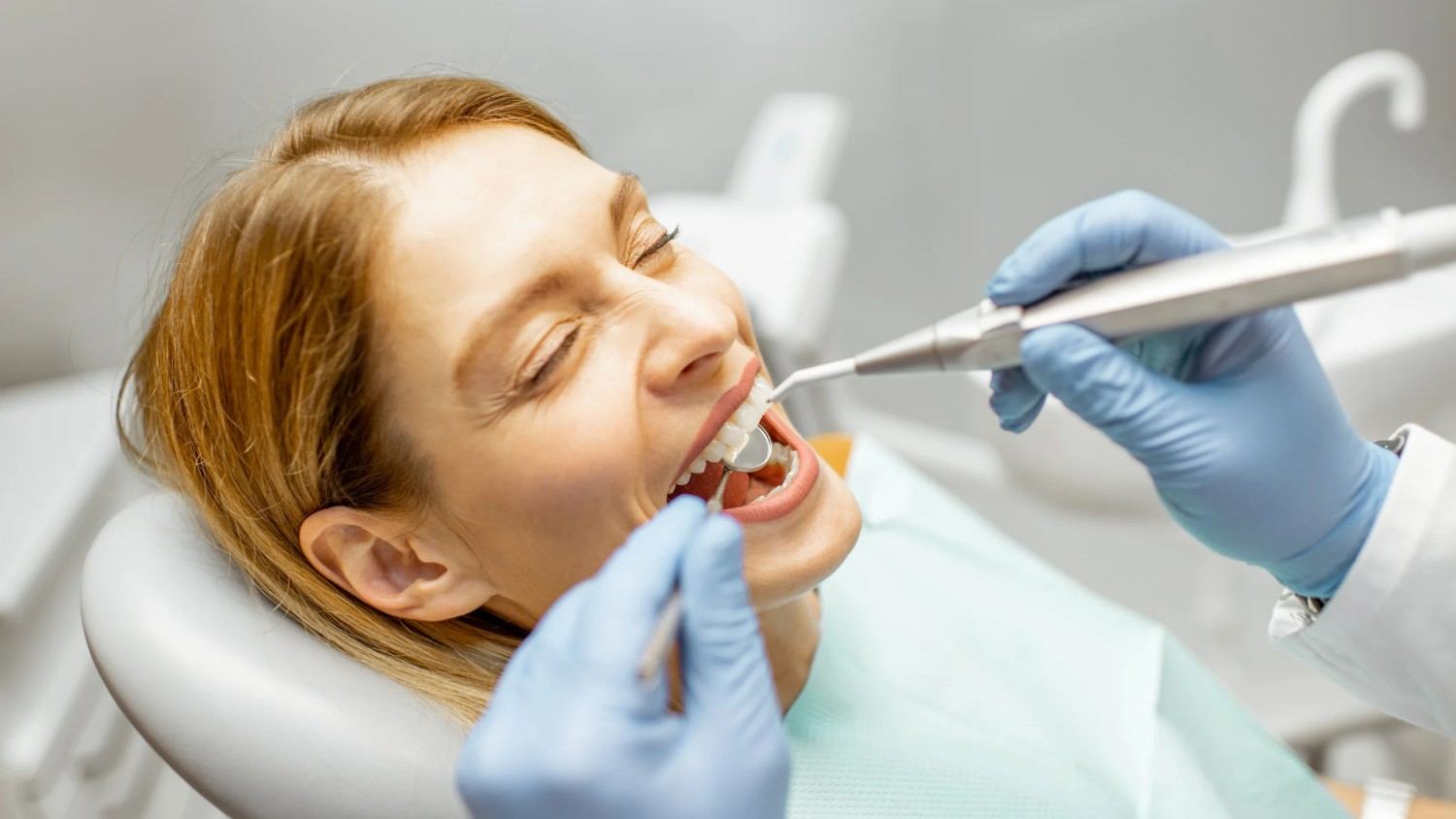
If you're switching dentists, just moved to the Tri-Cities, or it's been a few years since your last checkup, the first appointment can feel like a bit of an unknown. What will they do? Will they find a bunch of problems? How long is this going to take?
Here's the short answer: a first visit is mostly about getting a complete baseline. Your dentist and hygienist review your health history, take any X-rays that are needed, check your teeth, gums, bite, and soft tissues, and talk with you about what they found. Many patients also get a cleaning the same day, but not always, and we'll explain why below.
What happens during a new patient dental exam?
A first visit is more thorough than a routine six-month checkup. Dentists call it a comprehensive exam, because it's the starting point everything else gets compared to. Here's what it usually includes.
- Health history and your goals You'll be asked about medical conditions, medications, allergies, and past dental work. This matters more than people expect. Many medical conditions affect oral health, and some medications cause dry mouth or affect bleeding and healing. It's also your chance to say what's bothering you, what you want to change, and anything that makes dental visits hard for you.
- X-rays, if they're needed X-rays show what an exam can't: decay between teeth, bone levels, infections at the root, and impacted teeth. Not everyone needs the same set. Your dentist decides based on your age, history, and what they see. If you have recent X-rays from a previous dentist, ask them to send them over.
- A gum check The hygienist gently measures the small space between each tooth and the gum with a thin probe. Healthy spaces are shallow. Deeper readings, bleeding, or gum recession can point to gum disease. It takes a few minutes and gives a baseline for future visits.
- A tooth-by-tooth exam The dentist checks for cavities, worn or cracked teeth, failing fillings or crowns, and signs of grinding.
- An oral cancer screening This is quick and painless. The dentist looks at your tongue, cheeks, and throat, and feels along your jaw and neck for anything unusual.
- Bite and jaw They'll look at how your teeth come together and may ask about jaw soreness, clicking, or headaches.
- A conversation about what they found You should leave knowing what's healthy, what needs attention, what's urgent, and what can wait. A good treatment plan is prioritized, not a list of everything at once.
How long does a first dental appointment take?
Plan for more time than a regular cleaning. The exact length depends on whether a cleaning happens the same day and how much needs to be reviewed.
Will I get my teeth cleaned at the first visit?
Often, yes. But the type of cleaning depends on what the exam finds, and this is where a lot of confusion comes from.
- A regular cleaning is for gums that are healthy or close to it. It removes plaque and tartar above and just below the gum line. This is the cleaning most insurance plans cover as preventive care.
- A deep cleaning (scaling and root planing) is for gum disease. If the gum check shows deeper pockets and tartar below the gums, a regular cleaning can't reach it. A deep cleaning treats the infection and is billed as treatment, not prevention, so insurance usually covers it differently.
- Sometimes there's an in-between step. If heavy tartar makes a full exam difficult, the dentist may recommend a preliminary cleaning first, then complete the evaluation.
If you've gone several years without a cleaning, it's not unusual to need more than a standard one. That's not a judgment, and it's not an upsell. It's the treatment that matches what's going on under the gums. Your dentist should show you the measurements and explain why. If they don't, ask.
For more on why gums need this kind of care, see our post on what causes gum disease and how to spot it early, or learn about our gum disease treatment.
Do I need X-rays at my first visit?
Usually, yes, because your dentist has no baseline yet. But how many and which kind depends on you.
- Dental X-rays use low radiation.
- The American Dental Association updated its X-ray safety recommendations in 2024. It no longer recommends lead aprons or thyroid collars for routine dental X-rays, including for pregnant patients. If you don't see one, that's why. (ADA recommendations)
- Bring or forward recent X-rays from your last dentist. You may need fewer new images.
"It's been years since I've been to the dentist." Is that a problem?
No. It's one of the most common things new patients tell us, and it's a good reason to come in, not a reason to stay away.
What helps: be upfront about how long it's been, anything that hurts, and whether you get anxious. The team can pace the visit, explain each step before doing it, and talk about options if anxiety has kept you from going. If that's you, our sedation dentistry page explains what's available.
What should I bring to my first dental appointment?
- Photo ID
- Your dental insurance card, if you have one
- A list of medications and supplements (or just snap a photo of the bottles)
- Names of your physician and any specialists you see
- Your previous dentist's contact info, so records and X-rays can be requested
- Questions you want answered
Filling out new patient forms before you arrive saves time. We always email or text you these forms prior to your visit.
What does a first dental visit cost?
It depends on your coverage and what's done that day.
- With insurance: Most plans cover exams, X-rays, and regular cleanings as preventive care. Prime Dental offers $0 cleanings for most insurance plans. Your out-of-pocket cost depends on your specific plan and whether you need treatment beyond a regular cleaning. If you still have benefits left this year, here's how to use them before they reset.
- Without insurance: Prime Dental offers a $79 new patient visit for patients without insurance. [PRIME DENTAL INPUT NEEDED: Confirm exactly what the $79 new patient visit includes (exam, X-rays, cleaning?) and whether it applies if a deep cleaning is needed.]
- Ongoing care without insurance: Our Membership Club covers two cleanings, exams, necessary X-rays, fluoride, and an emergency exam each year, plus a discount on other treatment. Plans start at $29/month for kids and $35/month for adults, with a one-time $79 activation fee.
- Financing: For treatment beyond the first visit, payment options are available through CareCredit, Sunbit, and HFD. See our financing options.
If cost is a worry, ask for an estimate before treatment starts. You should never be surprised.
New patient visits at our Tri-Cities offices
We see new patients at our Kennewick, Pasco, and West Richland offices, with early morning, evening, and Saturday hours at all three. That makes it easier to fit a first visit around work or school without taking a full day off.
If something hurts right now, don't wait for a routine opening. We offer same-day care for urgent problems through our emergency dental team.
Ready to get your baseline?
A first visit is the easiest way to find out where you stand, with no pressure to do everything at once. Request an appointment at the office closest to you, and let us know if it's been a while or if you're nervous. We'll plan the visit around that.
Common questions about first dental visits
Q. What happens at a new patient dental appointment?
A. Your dentist reviews your health history, takes any needed X-rays, checks your gums, teeth, bite, and soft tissues (including an oral cancer screening), and explains what they found. Many patients also get a cleaning the same day.
Q. Why do I need a deep cleaning when I only came in for a regular cleaning?
A. If the exam shows gum disease, with deeper gum pockets and tartar below the gum line, a regular cleaning can't treat it. A deep cleaning (scaling and root planing) removes buildup from those deeper areas so the gums can heal.
Q. Are dental X-rays safe?
A. Dental X-rays use low radiation levels, and dentists take them only when they're needed for diagnosis. The ADA's current recommendations say lead aprons and thyroid collars are no longer necessary for routine dental X-rays.
Q. How often should I see the dentist after my first visit?
A. It depends on your mouth. Many people do well with visits every six months. Patients with gum disease often need cleanings more often. Your dentist will recommend a schedule based on what they find.
Q. Can I go to the dentist without insurance in the Tri-Cities?
A. Yes. Prime Dental offers a $79 new patient visit for patients without insurance, along with membership plans and financing options for ongoing care.
Most Read
Loading...
Categories
Loading...